
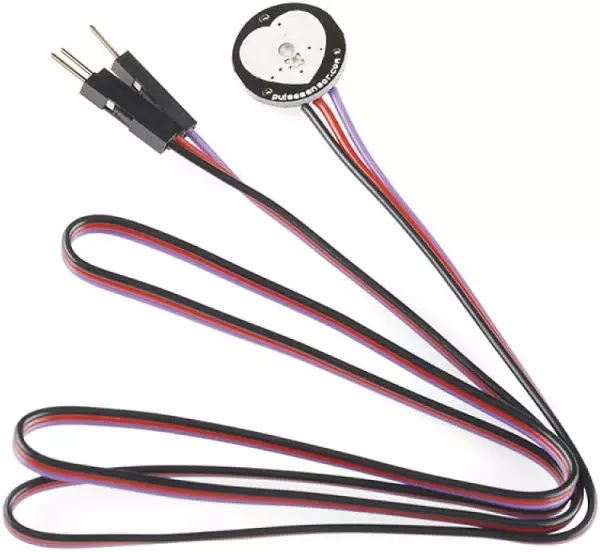
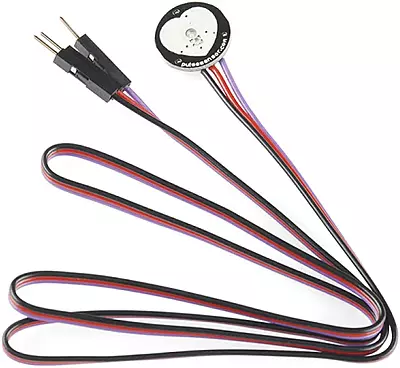

Pulse Sensor Heart Rate Module for Arduino, ESP32 & Raspberry Pi | Heartbeat Detection Sensor
Monitor heart rate with the Pulse Sensor Heart Rate Module, compatible with Arduino, ESP32, Raspberry Pi, NodeMCU, STM32, and other microcontrollers. Designed using photoplethysmography (PPG) technology, this sensor detects pulse signals through a fingertip or earlobe and provides an analog output for heart rate monitoring projects. Ideal for health monitoring, wearable electronics, IoT, biomedical education, fitness projects, and STEM learning, it is easy to interface and suitable for both beginners and developers.
Customize
Share :
Compatible with Arduino Uno, Nano, Mega, ESP32, Raspberry Pi (with ADC), ESP8266 NodeMCU, STM32, and other development boards, the module provides an analog output that can be processed to calculate heart rate in beats per minute (BPM).
Whether you're building a wearable health monitor, IoT fitness tracker, biomedical project, or educational electronics experiment, the Pulse Sensor offers an easy and reliable way to measure pulse signals.
Note: This module is intended for educational, research, and hobby electronics projects. It is not a medical device and should not be used for clinical diagnosis or treatment.
Key Features
- Heart Rate Detection Sensor
- Photoplethysmography (PPG) Technology
- Analog Output Signal
- Compact and Lightweight Design
- High Sensitivity Optical Sensor
- Easy Microcontroller Interface
- Low Power Consumption
- Stable Performance
- Suitable for Finger or Earlobe Measurements
- Beginner-Friendly Integration
- Compatible with Arduino, ESP32, Raspberry Pi, NodeMCU, and STM32
- Ideal for IoT, Wearables, Biomedical Projects, and STEM Education
Technical Specifications
| Specification | Details |
|---|---|
| Product Type | Pulse Sensor Module |
| Sensor Technology | Photo plethysmography (PPG) |
| Output | Analog |
| Operating Voltage | 3.3V – 5V DC |
| Interface | Analog Signal |
| Measurement | Heart Rate / Pulse Detection |
| Compatible Body Locations | Fingertip, Earlobe |
| Compatibility | Arduino, ESP32, Raspberry Pi (with ADC), NodeMCU, STM32 |
Applications
- Heart Rate Monitoring
- Wearable Electronics
- Fitness Monitoring
- Biomedical Education
- Health Monitoring Projects
- IoT Healthcare Devices
- Arduino Projects
- ESP32 Projects
- Raspberry Pi Projects
- STEM Education
- Embedded Systems
- Biomedical Research
- DIY Electronics
- Sensor Learning
- Engineering Projects
Package Includes
- 1 × Pulse Sensor Heart Rate Module
Why Buy from Horizocart?
- Genuine quality-tested sensor modules
- Reliable pulse signal detection
- Fast shipping across India
- Secure packaging
- Competitive pricing
- Trusted electronics and IoT supplier
- Excellent customer support
- Ideal for students, makers, engineers, researchers, and educators
Frequently Asked Questions
Q. Is this compatible with Arduino Uno?
Yes. It is fully compatible with Arduino Uno, Nano, Mega, Leonardo, and other Arduino-compatible boards.
Q. Can I use it with ESP32?
Yes. It works with ESP32 analog input pins for pulse signal acquisition.
Q. Does it work with Raspberry Pi?
Yes. It can be used with Raspberry Pi when an external Analog-to-Digital Converter (ADC) is used, since Raspberry Pi does not include built-in analog inputs.
Q. How does the pulse sensor work?
The sensor uses photo plethysmography (PPG) to detect changes in blood flow caused by each heartbeat and outputs a corresponding analog signal.
Q. Is this a medical device?
No. This module is designed for educational, hobby, and research purposes and is not intended for medical diagnosis or clinical use.
Q. Where should the sensor be placed?
It is commonly placed on a fingertip or earlobe for pulse detection.
Q. Can I build a wearable heart rate monitor with this sensor?
Yes. It is commonly used in wearable electronics, IoT health monitoring projects, and fitness tracking prototypes.