
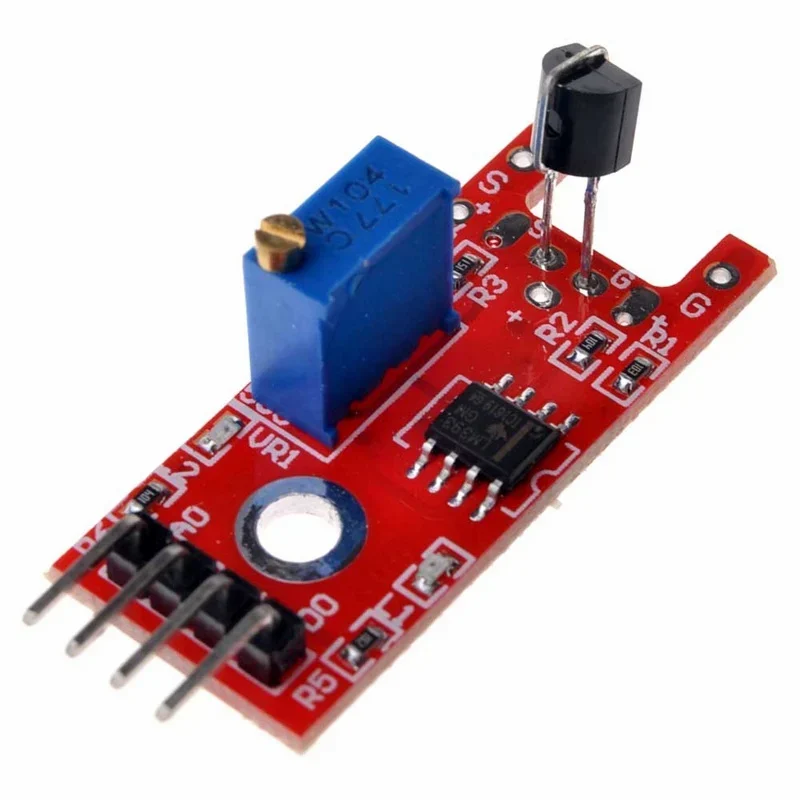
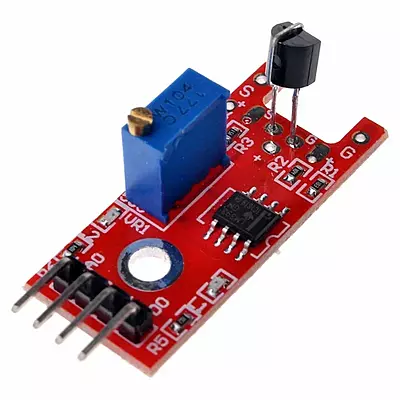


KY-036 Metal Touch Sensor Module for Arduino, ESP32 & Raspberry Pi | Touch Detection Sensor
Detect human or metal touch with the KY-036 Metal Touch Sensor Module, compatible with Arduino, ESP32, Raspberry Pi, NodeMCU, STM32, and other microcontrollers. Operating from a 5V DC supply, this module provides both digital and analog outputs for flexible integration into electronics projects. With an onboard sensitivity adjustment potentiometer, it is ideal for touch-triggered alarms, interactive electronics, robotics, smart home automation, IoT systems, and STEM education.
Customize
Share :
Compatible with Arduino Uno, Nano, Mega, ESP32, Raspberry Pi, ESP8266 NodeMCU, STM32, and other development boards, the module includes an onboard potentiometer that allows users to adjust the touch sensitivity according to their application requirements.
Its compact design and easy interfacing make it suitable for interactive projects, security systems, touch-activated alarms, robotics, smart home automation, IoT devices, and educational electronics.
Whether you're building a touch-controlled switch or experimenting with sensor technology, the KY-036 offers an affordable and beginner-friendly solution.
Key Features
- KY-036 Metal Touch Sensor Module
- Detects Human or Metal Touch
- Digital & Analog Signal Outputs
- Adjustable Sensitivity Potentiometer
- Darlington Transistor Detection Circuit
- Fast Response Time
- Compact PCB Design
- Easy GPIO Interface
- Stable Performance
- Low Power Consumption
- Compatible with Arduino, ESP32, Raspberry Pi, NodeMCU, and STM32
- Ideal for Robotics, IoT, Security Systems, and STEM Education
Technical Specifications
| Specification | Details |
|---|---|
| Product Type | Metal Touch Sensor Module |
| Model | KY-036 |
| Detection Type | Human & Metal Touch Detection |
| Operating Voltage | 5V DC |
| Output | Digital (DO) & Analog (AO) |
| Sensitivity Adjustment | Onboard Potentiometer |
| Detection Circuit | Darlington Transistor |
| Interface | Digital & Analog GPIO |
| Compatibility | Arduino, ESP32, Raspberry Pi, NodeMCU, STM32 |
Applications
- Touch Detection
- Metal Contact Detection
- Touch-Activated Alarms
- Security Systems
- Robotics
- Smart Home Automation
- Interactive Electronics
- IoT Projects
- STEM Education
- Embedded Systems
- DIY Electronics
- Engineering Projects
- Touch Switches
- Educational Experiments
- Sensor Learning
Package Includes
- 1 × KY-036 Metal Touch Sensor Module
Why Buy from Horizocart?
- Genuine quality-tested sensor modules
- Reliable touch detection performance
- Fast shipping across India
- Secure packaging
- Competitive pricing
- Trusted electronics and IoT supplier
- Excellent customer support
- Ideal for students, makers, engineers, and professionals
Frequently Asked Questions
Q. Is this compatible with Arduino Uno?
Yes. The KY-036 is fully compatible with Arduino Uno, Nano, Mega, Leonardo, and other Arduino-compatible boards.
Q. Can I use it with ESP32?
Yes. It works with ESP32 using both digital and analog GPIO pins.
Q. Does it work with Raspberry Pi?
Yes. The digital output can be connected directly to Raspberry Pi GPIO pins. The analog output requires an external ADC, as Raspberry Pi does not have built-in analog inputs.
Q. What does this sensor detect?
It detects human touch or contact with conductive metal objects, depending on the application.
Q. What is the onboard potentiometer used for?
The potentiometer allows you to adjust the touch sensitivity threshold to suit your project requirements.
Q. Why does the module provide both digital and analog outputs?
The digital output is useful for simple touch detection, while the analog output can provide varying signal levels depending on the detected touch characteristics.
Q. What projects is this module suitable for?
It is widely used in touch-controlled switches, alarms, robotics, interactive electronics, IoT projects, and educational experiments.